

When it comes to the operation of forklifts, one of the most critical components is the battery. As a trusted forklift batteries supplier, I've had the privilege of working closely with various businesses to understand their power needs. A common question that often arises is, "What is the voltage of a typical forklift battery?" In this blog post, I'll delve into the details of forklift battery voltages, their significance, and how they impact the performance of forklifts.
Understanding Forklift Battery Voltages
Forklift batteries come in a range of voltages, and the most common ones are 24V, 36V, and 48V. These voltages are not randomly chosen; they are carefully selected based on the specific requirements of the forklift and its intended applications.
24V Forklift Batteries
A 24V LiFePO4 Forklift Battery is often used in smaller forklifts or those with less demanding tasks. These forklifts are typically used in light-duty applications such as warehousing, retail, and small-scale manufacturing. The lower voltage is suitable for these applications because it provides enough power to operate the forklift's basic functions, such as lifting and moving pallets, without consuming excessive energy.
One of the advantages of a 24V battery is its relatively lower cost compared to higher voltage batteries. It also requires less complex charging equipment, which can result in cost savings for the end-user. However, it's important to note that a 24V battery may not be suitable for larger forklifts or those used in heavy-duty applications, as it may not provide enough power to meet the demands of these tasks.
36V Forklift Batteries
The 36V 690Ah LiFePO4 Forklift Battery is a popular choice for medium-sized forklifts. These forklifts are commonly used in medium-duty applications such as distribution centers, large warehouses, and manufacturing facilities. The 36V voltage provides a good balance between power and energy consumption, making it suitable for a wide range of tasks.
A 36V battery offers more power than a 24V battery, allowing the forklift to handle heavier loads and perform more strenuous tasks. It also provides a longer operating time between charges, which can increase productivity and reduce downtime. However, the cost of a 36V battery and its charging equipment is typically higher than that of a 24V battery.
48V Forklift Batteries
48V LiFePO4 Forklift Battery are used in larger forklifts and those designed for heavy-duty applications. These forklifts are commonly found in industries such as construction, mining, and heavy manufacturing. The higher voltage provides the necessary power to lift and move extremely heavy loads, as well as operate additional features such as hydraulic systems and advanced control systems.

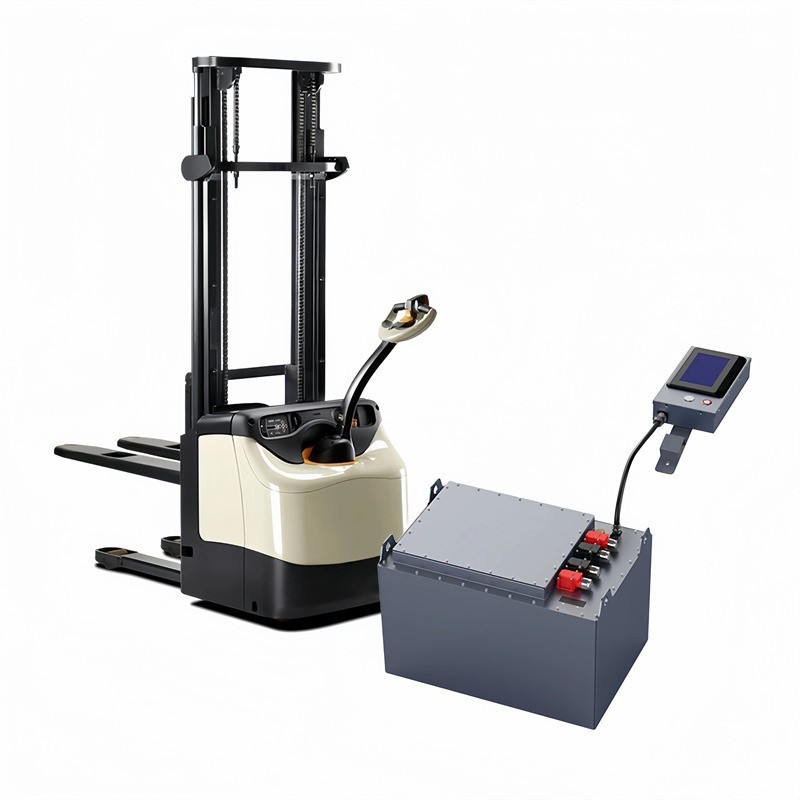
While a 48V battery offers the most power and performance, it also comes with a higher cost. The charging equipment for a 48V battery is more complex and expensive, and the battery itself is larger and heavier. However, for businesses that require the highest level of performance from their forklifts, the investment in a 48V battery is often justified.
Factors Affecting Battery Voltage Selection
When choosing the appropriate voltage for a forklift battery, several factors need to be considered:
Forklift Size and Capacity
The size and capacity of the forklift are the primary factors that determine the required battery voltage. Larger forklifts with higher lifting capacities require more power to operate, and therefore, a higher voltage battery is needed. Conversely, smaller forklifts with lower lifting capacities can operate with a lower voltage battery.
Application and Usage
The type of application and the frequency of use also play a significant role in battery voltage selection. Forklifts used in light-duty applications, such as occasional pallet moving in a small warehouse, may be suitable for a 24V battery. On the other hand, forklifts used in heavy-duty applications, such as continuous operation in a large distribution center, will require a 36V or 48V battery to ensure optimal performance.
Charging Infrastructure
The existing charging infrastructure at the facility is another important consideration. If the facility has limited charging capabilities or uses a specific type of charging equipment, it may be necessary to choose a battery voltage that is compatible with the existing infrastructure. Additionally, the charging time and frequency should be taken into account to ensure that the forklift can be charged efficiently and without causing disruptions to the operation.
Cost Considerations
Cost is always a factor in any purchasing decision. While higher voltage batteries offer more power and performance, they also come with a higher price tag. It's important to balance the cost of the battery and its charging equipment with the expected benefits and productivity gains. In some cases, a lower voltage battery may be a more cost-effective solution, especially for businesses with limited budgets or less demanding applications.
Importance of Choosing the Right Voltage
Choosing the right voltage for a forklift battery is crucial for several reasons:
Performance and Efficiency
The correct voltage ensures that the forklift operates at its optimal performance level. A battery with too low a voltage may not provide enough power to handle the forklift's tasks, resulting in reduced productivity and increased wear and tear on the equipment. On the other hand, a battery with too high a voltage may consume more energy than necessary, leading to higher operating costs.
Battery Life
Using the appropriate voltage helps to extend the life of the battery. Overloading a battery by using a voltage that is too low can cause it to overheat and degrade more quickly. Conversely, using a voltage that is too high can also damage the battery and reduce its lifespan. By choosing the right voltage, the battery can operate within its designed parameters, resulting in a longer and more reliable service life.
Safety
Selecting the correct voltage is also important for safety reasons. Using a battery with an incorrect voltage can pose a risk of electrical shock, fire, or other safety hazards. It's essential to follow the manufacturer's recommendations and guidelines when choosing and installing a forklift battery to ensure the safety of the operators and the facility.
Conclusion
In conclusion, the voltage of a typical forklift battery can vary depending on the size, capacity, and application of the forklift. The most common voltages are 24V, 36V, and 48V, each offering different levels of power and performance. When choosing the appropriate voltage, it's important to consider factors such as forklift size, application, charging infrastructure, and cost. By selecting the right voltage, businesses can ensure optimal performance, efficiency, and safety from their forklifts.
If you're in the market for a forklift battery and need assistance in choosing the right voltage for your specific needs, please don't hesitate to contact us. As a leading forklift batteries supplier, we have the expertise and experience to help you make an informed decision. We offer a wide range of high-quality forklift batteries at competitive prices, and our team of professionals is dedicated to providing excellent customer service.
References
- Forklift Battery Basics. (n.d.). Retrieved from [Website Name]
- Choosing the Right Forklift Battery. (n.d.). Retrieved from [Website Name]
- Battery Voltage and Performance. (n.d.). Retrieved from [Website Name]