


Your Professional Container ESS Supplier
Our factories can produce both LHD and RHD vehicles to meet up with different countries' driving habit, we can independently develop and support product customization & offer different services for our customers: OEM (Original Equipment Manufacture); SKD (Semi-Knocked Down); CKD (Completely-Knock Down).Which can offer the one-stop service to totally meet up with the international customers' demands with One-Stop Service of Solar, EV Inverter, Energy Storage, EV Charging and the EV Cars & EV Tricycles, totally support customers sort out the worry of no electric charging for the EV cars in their countries.
-
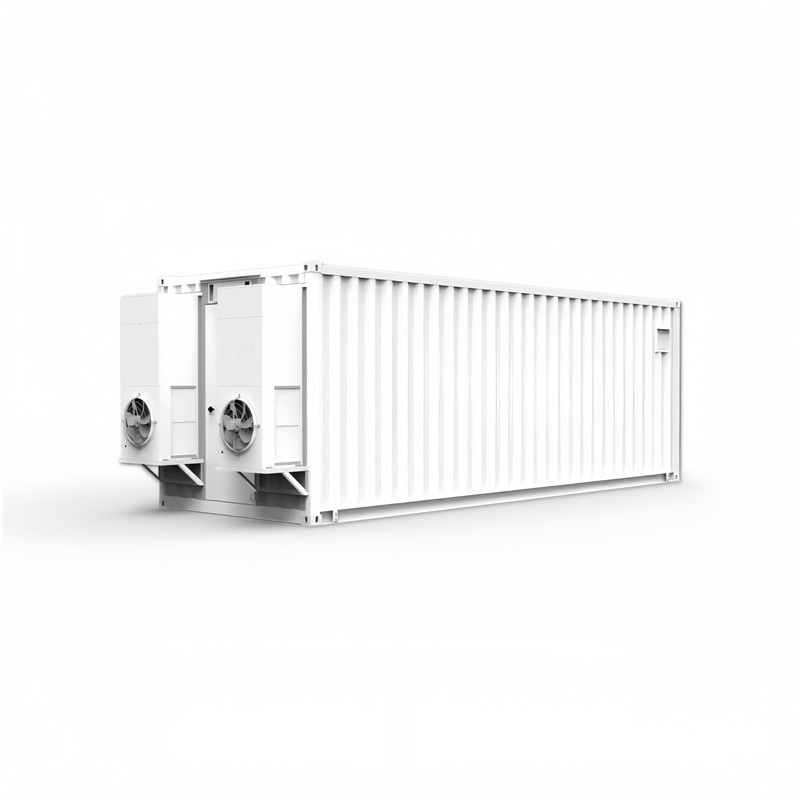
![Liquid Cooling ESS Container]() Liquid Cooling ESS ContainerCESS-3354-6709L. • 3354-6709kWh Nominal Capacity. • IP67 dual firefighting and anti-explosion design.. • Low-temperature difference to 3℃, extend battery lifetime.. • 30% higher energy density thanread more
Liquid Cooling ESS ContainerCESS-3354-6709L. • 3354-6709kWh Nominal Capacity. • IP67 dual firefighting and anti-explosion design.. • Low-temperature difference to 3℃, extend battery lifetime.. • 30% higher energy density thanread more -
![Liquid Cooling Battery]() Liquid Cooling BatteryCE166280-L-H. • 46592Wh Nominal Capacity. • IP65 dual firefighting and anti-explosion design.. • Low-temperature difference to 3℃, extend battery lifetime.. • 30% higher energy density than airread more
Liquid Cooling BatteryCE166280-L-H. • 46592Wh Nominal Capacity. • IP65 dual firefighting and anti-explosion design.. • Low-temperature difference to 3℃, extend battery lifetime.. • 30% higher energy density than airread more


Quality Assurance
We have 100% quality guarantee to customers. We will be responsible for any quality problem.
Fast Delivery
We have full stock, and can deliver within short time. efficiently to ensure your orders are delivered punctually.
Our Mainly Market
ZDX has achieved good cooperation with customers from more than 60 countries In the past 6 years, such as Europe, America and Southeast Asia, Central Asia, the Middle East, in the international market has won a good reputation and customer trust.
Strong R&D Team
The R&D team of more than 30 professionals, who have more than 10 years of R&D experience at top companies in the industry.
Advantages of Container ESS
Mobility and Portability:
Containerized BESS can be easily transported to different locations, providing a mobile and portable energy storage solution. This is advantageous for temporary or emergency applications, as well as for projects that require flexibility in deployment.
Rapid Deployment:
The containerized design allows for faster deployment compared to traditional energy storage installations. BESS can be pre-assembled and tested off-site, reducing on-site construction time and accelerating the commissioning process.
Scalability:
Containers are modular, allowing for easy scalability by adding or removing containers as energy storage needs change. This modular approach makes it simple to match the system capacity to evolving energy demand.
Space Efficiency:
Containerized systems are space-efficient, especially in scenarios where available space is limited or expensive. They can be stacked or arranged in a way that maximizes land use, making them suitable for urban environments or sites with spatial constraints.
Standardization:
Containerization follows standardized dimensions, which simplifies logistics, transportation, and installation. Standardization also facilitates compatibility with existing infrastructure, streamlining integration into the electrical grid or other energy systems.
Cost Efficiency:
Containerized BESS can lead to cost savings through economies of scale. Standardization in design and manufacturing reduces engineering and construction costs. Additionally, the containerized approach may result in faster installation, reducing labor costs.
Environmental Protection:
The container provides a protective enclosure for the batteries, shielding them from environmental elements such as weather, temperature variations, and dust. This protection enhances the durability and longevity of the battery system.
Security and Safety:
Containers can be equipped with security features, such as locks and alarms, to protect the battery system from unauthorized access. Safety measures, including fire suppression systems and insulation, can be integrated to enhance overall system safety.
Remote Monitoring and Control:
Many containerized BESS come with advanced monitoring and control systems. Operators can remotely monitor the performance of the system, implement control strategies, and optimize energy storage based on real-time data.
Adaptability to Harsh Environments:
Containerized BESS are well-suited for deployment in challenging or remote environments. The container provides an additional layer of protection against harsh weather conditions, making them suitable for applications in extreme climates.
Compatibility with Various Battery Technologies:
Containerized BESS can accommodate different types of battery technologies, allowing flexibility in choosing the most suitable technology for specific applications or projects.
As renewable energy sources like wind and solar become more prevalent, the importance of effective energy storage cannot be overstated. Solar and wind energy are inherently intermittent, making storage solutions like the Containerized Energy Storage System critical in ensuring a steady and reliable power supply.
Moreover, as the global community pushes towards greener solutions and carbon neutrality, the CESS stands out as a sustainable option. It reduces the need for constructing large-scale storage facilities, thereby decreasing the carbon footprint associated with infrastructure development.
Furthermore, with continuous technological advancements, the efficiency, capacity, and lifespan of CESS are expected to improve, making them even more attractive for future projects.
The Containerized Energy Storage System is not just a passing trend; it's a transformative solution in the energy storage sector. Its potential to revolutionize how energy is stored and delivered is immense. As we venture deeper into the renewable energy era, the CESS is poised to play an even more critical role in shaping a sustainable and reliable energy future.
How Container ESS Work

Energy Generation:
When energy is generated from renewable sources, it can be injected into the system for storage.
Energy Storage:
The stored energy is held in batteries within the container until it is needed.

Energy Management:
Advanced control systems monitor and manage energy flow, optimizing usage and storage.
Energy Distribution:
When demand arises, stored energy can be released back into the grid or consumed onsite.
Real-World Applications of Container ESS
Renewable Energy Farms
On solar and wind farms, CESS can store excess energy generated during peak production times, ensuring that this energy can be utilized later when generation is low.
Commercial and Industrial Sectors
Businesses can use containerized systems to manage their energy costs better, storing power when prices are low, and using it when rates increase. This kind of energy management leads to significant savings and reduces reliance on the grid.
Emergency Power Supply
In regions prone to blackouts or natural disasters, containerized systems provide a reliable backup power solution, ensuring that essential services remain operational during crises.
Microgrids
CESS are vital components of microgrids, providing necessary energy storage to enhance resiliency and independence from the traditional energy grid.
Key Technologies of Container ESS
Battery Technology
The battery is the core of the storage system, and several aspects must be considered for containerized battery storage systems:
1) Battery Selection: Lithium-ion batteries have become the mainstream choice due to their high energy density, long cycle life, and efficiency.
2) Modular Design: Batteries are typically integrated in a modular form, making installation, maintenance, and replacement easier while enhancing system scalability.
3) Battery Consistency: Ensuring consistency across battery cells is essential to prevent performance degradation and safety risks, thereby extending the overall lifespan of the system.
Battery Management System (BMS)
The BMS serves as the "brain" of the energy storage system. Its key technologies include:
1) State Monitoring: Real-time monitoring of battery voltage, current, and temperature to ensure safe operation within optimal parameters.
2) Balancing and Fault Protection: Active balancing ensures consistent voltage across the battery cells, preventing overcharging or deep discharging. Quick fault diagnosis and protection measures are crucial for maintaining system integrity.
3) Communication & Integration: The BMS must efficiently communicate with other systems in the container (such as the Energy Management System (EMS) and PCS) for coordinated control.
Power Electronics
Power electronic devices play a crucial role in the storage system, with key technologies including:
1) Power conversion system(PCS) Design: PCS convert DC to AC power and need to be efficient, with high power density and rapid response capabilities.
2) Grid Connection: The storage system must seamlessly connect to the grid, involving technologies for synchronization, frequency regulation, and reactive power compensation.
3) Energy Conversion Efficiency: Optimizing the efficiency of inverters and other power electronics to reduce energy losses is critical for system performance.
Thermal Management Technology
Thermal management is a key challenge in containerized battery storage systems. Solutions include:
1) Cooling Design: Given the closed space of containers, efficient heat dissipation methods (e.g., liquid cooling, air cooling, or phase-change material cooling) are required to prevent overheating.
2) Temperature Monitoring and Balancing: Continuous temperature monitoring of batteries and inverters ensures uniform temperature distribution, preventing overheating or excessive cooling.
3) Environmental Adaptability: The thermal management system must be capable of heating or cooling the system to maintain optimal operating temperatures in extreme weather conditions.
Control Systems
Control systems ensure the stable operation of the storage system, with critical technologies including:
1) Energy Management System (EMS): EMS optimizes charging and discharging strategies to ensure the efficient operation of the system.
2) Fault Diagnosis & Protection: Fast fault detection and protection capabilities are necessary to prevent system damage or accidents.
FAQ
We're well-known as one of the leading container ess manufacturers and suppliers in China. Please feel free to buy high quality container ess at competitive price from our factory. Contact us for more details.
container ess, Liquid Cooling ESS Container, Liquid Cooling Battery