

Hey there! As a supplier of Liquid Cooling Battery, I've got a ton to share about the thermal management strategies for liquid cooling batteries. In this blog, I'll break down the importance of thermal management, the different strategies we use, and why these strategies matter for your battery's performance and lifespan.
Why Thermal Management is Crucial for Liquid Cooling Batteries
First off, let's talk about why thermal management is such a big deal. Batteries generate heat during charging and discharging. If this heat isn't properly managed, it can lead to a whole bunch of problems. For starters, high temperatures can speed up the degradation of battery materials. This means your battery won't last as long, and you'll have to replace it sooner than you'd like.
Moreover, uneven temperature distribution within the battery can cause some cells to age faster than others. This leads to an imbalance in the battery pack, reducing its overall capacity and efficiency. In extreme cases, overheating can even pose safety risks, like thermal runaway, which is a chain reaction of increasing temperature that can result in fires or explosions.
So, in a nutshell, effective thermal management is essential for ensuring the safety, performance, and longevity of liquid cooling batteries.
Different Thermal Management Strategies
Direct Liquid Cooling
One of the most effective thermal management strategies is direct liquid cooling. In this approach, the coolant comes into direct contact with the battery cells. This allows for a very efficient transfer of heat from the cells to the coolant.
The coolant used in direct liquid cooling is usually a dielectric fluid, which means it doesn't conduct electricity. This is important because it prevents short - circuits between the battery cells. The fluid absorbs the heat generated by the cells and then transfers it to a heat exchanger, where it's dissipated into the surrounding environment.
Direct liquid cooling offers several advantages. It provides a high cooling capacity, which is great for high - power applications. It also ensures a more uniform temperature distribution across the battery pack, reducing the risk of hot spots and cell imbalance. However, it can be more complex and expensive to implement compared to other cooling methods.
Indirect Liquid Cooling
Indirect liquid cooling is another popular strategy. In this case, the coolant doesn't come into direct contact with the battery cells. Instead, it flows through channels or plates that are in close proximity to the cells. The heat is transferred from the cells to the coolant through conduction.

This method is less complex and more cost - effective than direct liquid cooling. It's also easier to maintain because there's no risk of the coolant contaminating the battery cells. However, the cooling efficiency is slightly lower compared to direct liquid cooling, as the heat transfer has to go through an additional layer.
Hybrid Cooling Systems
Some applications may benefit from hybrid cooling systems, which combine direct and indirect liquid cooling methods. For example, a hybrid system might use direct liquid cooling for the high - power cells that generate a lot of heat, while using indirect liquid cooling for the rest of the battery pack.
Hybrid systems offer the best of both worlds. They can provide high cooling efficiency where it's needed most, while still being relatively cost - effective and easy to maintain. However, they are more complex to design and implement, requiring careful consideration of the thermal requirements of the battery pack.
The Role of the Liquid Cooling ESS Container
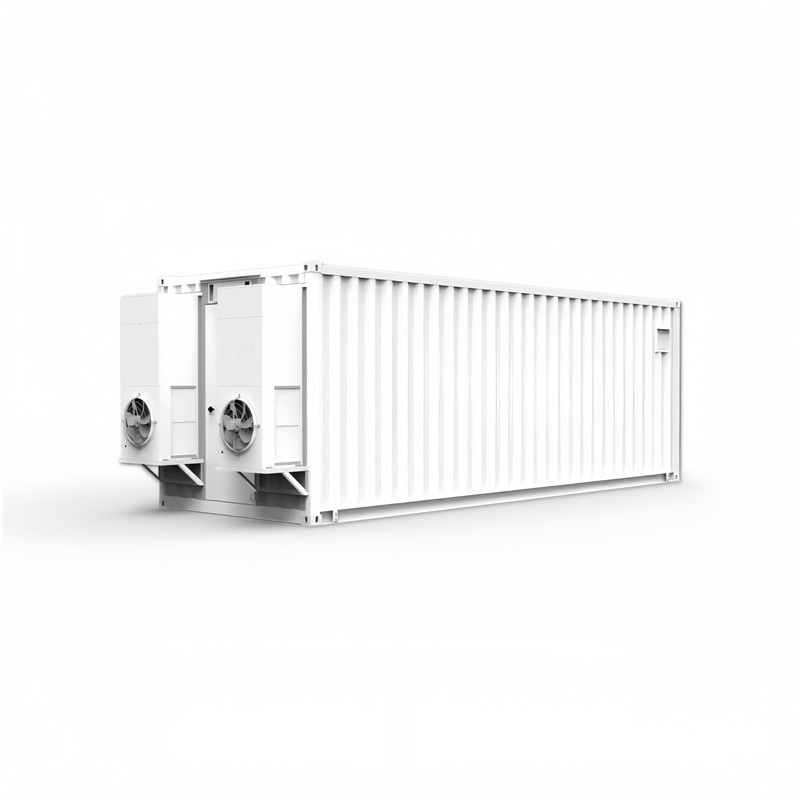
The Liquid Cooling ESS Container plays a crucial role in the thermal management of liquid cooling batteries. These containers are designed to house the battery packs and the cooling system in a safe and efficient manner.
They are often equipped with insulation materials to reduce heat transfer between the battery pack and the outside environment. This helps to maintain a stable temperature inside the container, regardless of the external conditions. The container also provides a physical barrier that protects the battery pack from dust, moisture, and other contaminants.
In addition, the design of the container allows for easy installation and maintenance of the cooling system. It provides access points for checking the coolant levels, replacing filters, and performing other maintenance tasks.
Benefits of Our Liquid Cooling Batteries' Thermal Management Strategies
By using these thermal management strategies, our Liquid Cooling Battery offers several benefits. Firstly, our batteries have a longer lifespan. The effective thermal management reduces the rate of battery degradation, allowing you to get more years of use out of your battery.
Secondly, our batteries offer higher performance. The uniform temperature distribution ensures that all cells in the battery pack are operating at their optimal level, resulting in a higher overall capacity and efficiency.
Finally, our batteries are safer. The thermal management strategies we use help to prevent overheating and thermal runaway, reducing the risk of fires and explosions.
Conclusion and Call to Action
In conclusion, thermal management is a critical aspect of liquid cooling batteries. The strategies we use, such as direct liquid cooling, indirect liquid cooling, and hybrid cooling systems, are designed to ensure the safety, performance, and longevity of our batteries. And our Liquid Cooling ESS Container provides the perfect environment for housing and protecting these batteries.
If you're in the market for high - quality liquid cooling batteries, we'd love to hear from you. Whether you're looking for a solution for a small - scale application or a large - scale energy storage project, we've got the expertise and the products to meet your needs. Reach out to us to start a conversation about your requirements and how our liquid cooling batteries can benefit your project.
References
- Chen, Z., & Xu, C. (2019). Thermal management of lithium - ion batteries for electric vehicles. Journal of Power Sources, 436, 226783.
- Smith, J. (2020). Advances in battery thermal management systems. Energy Storage Journal, 32, 101567.