

Hey there! I'm proud to be part of a company that supplies Liquid Cooling Battery. We're all about ensuring that batteries work efficiently and safely, and a big part of that is preventing overheating. So, let's dive into how liquid cooling does the job.
First off, why is battery overheating such a big deal? Well, when a battery gets too hot, a bunch of bad things can happen. For starters, it can cause the battery to degrade faster. The chemical reactions inside the battery that store and release energy are very sensitive to temperature. If it's too hot, these reactions can go haywire, causing the battery's capacity to decrease over time. That means you'll have to replace the battery sooner, which is a hassle and a cost for users.

Another major issue is safety. Overheating batteries can pose a fire or explosion risk. This is especially true for lithium - ion batteries, which are widely used in various applications, from electric vehicles to stationary energy storage systems. When a battery overheats, it can lead to a phenomenon called thermal runaway. In thermal runaway, the heat generated by the battery causes the temperature to rise even further, creating a self - perpetuating cycle that can end very badly.
So, how does liquid cooling come to the rescue? Liquid cooling systems use a special coolant liquid that circulates around the battery cells. This coolant is usually a mixture of water and glycol or some other specialized fluid with good heat - transfer properties.
The basic principle behind liquid cooling is heat transfer. When the battery cells generate heat during charging and discharging, the coolant that's in close contact with the cells absorbs this heat. Heat always flows from a warmer object (the battery cells) to a cooler one (the coolant). The coolant then takes this heat away from the battery cells as it circulates through the cooling system.
There are different ways to set up a liquid cooling system for batteries. One common method is to use cooling plates. These are flat plates that have channels inside for the coolant to flow through. The cooling plates are placed in direct contact with the battery cells. This allows for efficient heat transfer from the cells to the coolant.
Another approach is to use cooling jackets. These are like sleeves that wrap around the battery cells. The coolant flows through the space between the jacket and the cell, again absorbing the heat.
One of the great advantages of liquid cooling is its high heat - transfer efficiency. Liquids can carry a lot more heat away than air can. This means that liquid cooling systems can handle high - power batteries and rapid charging and discharging cycles without the battery getting too hot.
Let's talk about some real - world applications. In electric vehicles (EVs), battery overheating is a critical concern. EVs require large - capacity batteries to provide sufficient range, and these batteries generate a lot of heat, especially during fast charging or high - speed driving. Liquid Cooling Battery technology helps keep these batteries at an optimal temperature, ensuring longer battery life and better performance. Drivers can rely on their EVs to work safely and efficiently, without having to worry about battery overheating issues.
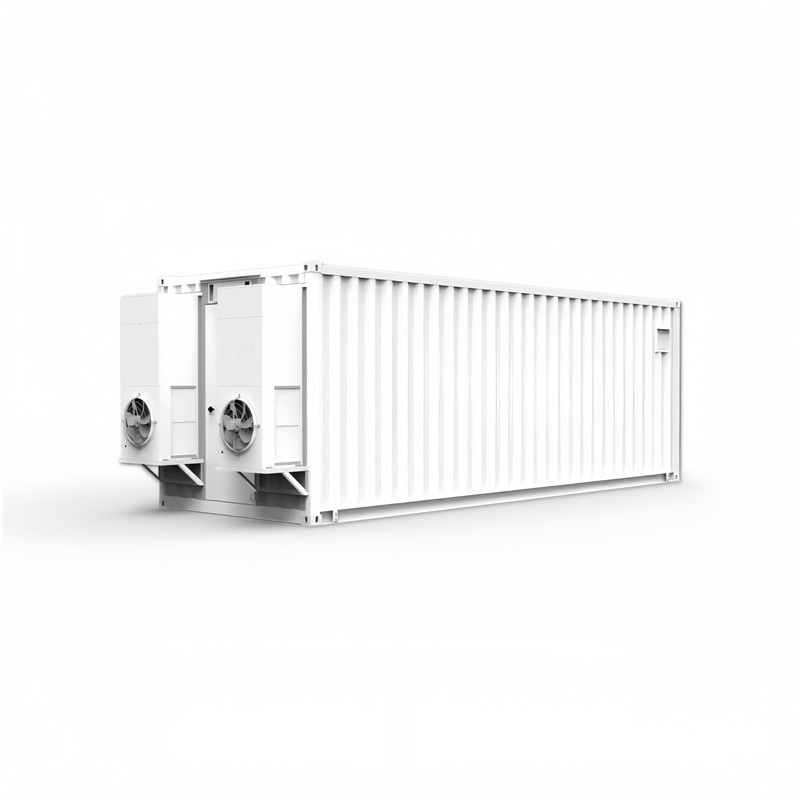
For stationary energy storage systems, such as those used in Liquid Cooling ESS Container, liquid cooling is also essential. These systems store energy from renewable sources like solar and wind, and they need to be able to handle large amounts of power. The battery banks in these containers can get very hot, especially during peak charging and discharging periods. Liquid cooling helps maintain a stable temperature, which is crucial for the long - term reliability of the energy storage system.
Now, let's look at the components of a liquid cooling system in more detail. There's the coolant itself, as I mentioned earlier. The choice of coolant is important. It needs to have good thermal conductivity, be non - corrosive to the battery materials and the cooling system components, and be able to operate over a wide range of temperatures.
The pump is another key component. The pump is responsible for circulating the coolant through the system. It needs to be reliable and able to provide enough pressure to ensure that the coolant flows smoothly over the battery cells.
There's also the radiator or heat exchanger. Once the coolant has absorbed the heat from the battery cells, it needs to release that heat. The radiator or heat exchanger does this by transferring the heat from the coolant to the surrounding air or another cooling medium. This cools down the coolant so that it can go back and absorb more heat from the battery cells.
In addition to preventing overheating, liquid cooling can also help with temperature uniformity. In a battery pack, it's important that all the cells are at a similar temperature. If some cells are much hotter than others, it can lead to uneven battery performance and premature degradation. Liquid cooling systems can help distribute the heat evenly across the battery pack, ensuring that all the cells operate under similar conditions.
One of the challenges of liquid cooling is the complexity and cost of the system. Installing a liquid cooling system requires more components and more maintenance compared to a simple air - cooling system. However, the benefits in terms of battery life, safety, and performance far outweigh these challenges, especially in high - performance applications.
At our company, we're constantly working on improving our Liquid Cooling Battery technology. We're researching new coolants that are more environmentally friendly and have even better heat - transfer properties. We're also looking at ways to make our liquid cooling systems more compact and energy - efficient.
If you're in the market for reliable and high - performance battery cooling solutions, we'd love to talk to you. Whether you're an EV manufacturer looking to improve the battery performance of your vehicles or a utility company in need of a robust energy storage system, our liquid cooling technology can make a big difference. Don't hesitate to reach out to us for a consultation and to discuss your specific requirements. We're here to help you get the most out of your battery systems while ensuring their safety and longevity.
References
- "Battery Thermal Management Systems: Design and Optimization" by X. Zhang and Y. Li
- "Advances in Electric Vehicle Battery Technology" edited by J. Chen and S. Wang