

Living in a cabin off the grid is a dream for many, offering a peaceful and self - sufficient lifestyle. One of the key components that makes this off - grid living possible is the off - grid solar inverter. As an off - grid solar inverter supplier, I've seen firsthand how these devices transform solar power into usable electricity for cabins. So, let's dig into how an off - grid solar inverter works in a cabin.
Understanding the Basics of Solar Power in a Cabin
First off, we need to talk about how solar power is initially captured in a cabin setup. Solar panels on the roof of the cabin are the starting point. These panels are made up of photovoltaic (PV) cells, which are designed to convert sunlight into direct current (DC) electricity. When sunlight hits these PV cells, it causes electrons to be excited and flow, creating an electrical current.
But here's the thing, most of the appliances in a cabin, like lights, TVs, and refrigerators, run on alternating current (AC) electricity. That's where the off - grid solar inverter comes in. It's the bridge that connects the DC power from the solar panels to the AC power needed for your cabin's electrical devices.
The Role of the Charge Controller
Before the electricity from the solar panels reaches the inverter, it usually passes through a charge controller. The charge controller is like a traffic cop for the electrical current. Its main job is to regulate the voltage and current coming from the solar panels to the battery bank. This is super important because overcharging a battery can damage it and shorten its lifespan.
The charge controller ensures that the batteries in your cabin are charged safely and efficiently. It monitors the state of charge of the batteries and adjusts the electrical input accordingly. Once the batteries are fully charged, it can prevent any additional current from the solar panels from flowing into the batteries.
How the Off - Grid Solar Inverter Works
Now, let's focus on the star of the show, the off - grid solar inverter. Once the batteries are charged, the DC electricity stored in them is sent to the inverter. The inverter's main function is to convert the DC electricity from the batteries into AC electricity.
It does this through a process called inversion. Inside the inverter, there are electronic components, such as transistors and capacitors, that work together to switch the direction of the electrical current and create an alternating current. The inverter is designed to produce an AC output with a specific voltage and frequency, usually matching the standard requirements of household appliances in your area (like 120V at 60Hz in the United States).
There are different types of off - grid solar inverters, and one of the most popular ones is the Off Grid Solar Inverter Pure Sine Wave. A pure sine wave inverter produces an AC output that closely mimics the smooth and consistent waveform of the electricity from the grid. This is important because many sensitive electronic devices, like laptops, smartphones, and some medical equipment, require a pure sine wave to operate properly. Using a pure sine wave inverter can prevent damage to these devices and ensure they work as intended.
Sizing the Inverter for Your Cabin
When setting up a solar power system in your cabin, it's crucial to choose the right - sized inverter. You need to consider the total power consumption of all the electrical devices you plan to use in your cabin. For example, if you have a small cabin with just a few lights, a small TV, and a laptop, a lower - wattage inverter might be sufficient.
However, if you want to run larger appliances like a refrigerator or an air conditioner, you'll need a more powerful inverter. One option is the Solar Inverter Off Grid 3000w. This type of inverter can handle higher - power loads, making it suitable for cabins with more demanding electrical needs.
Three - Phase Inverters for Larger Cabins
For larger cabins or those with more extensive electrical systems, a Off Grid 3 Phase Solar Inverter could be a great choice. Three - phase power is commonly used in commercial and industrial settings, but it can also be beneficial for off - grid cabins.
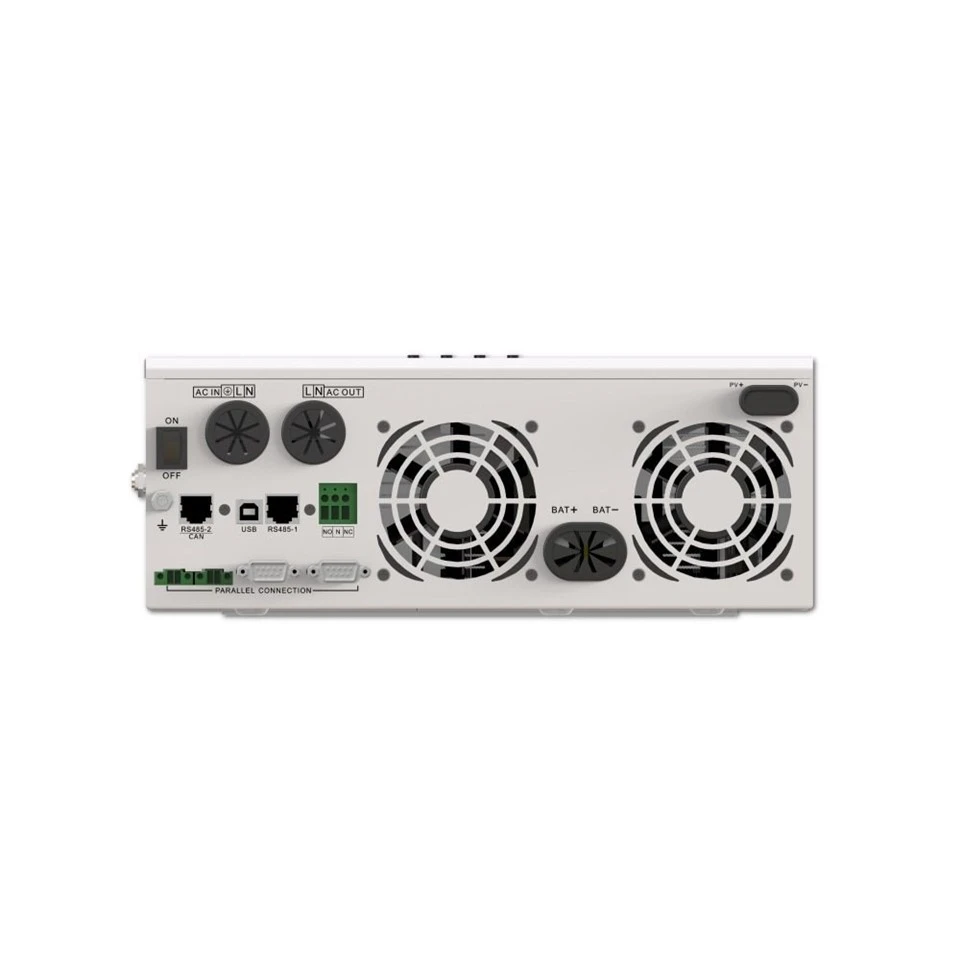

A three - phase inverter produces three separate AC waveforms that are out of phase with each other. This provides a more balanced and efficient power delivery compared to single - phase systems. It can handle larger loads more easily and is often used when there are multiple high - power appliances running simultaneously in the cabin.
Monitoring and Maintenance
Once you have your off - grid solar inverter up and running in your cabin, it's important to monitor its performance. Most modern inverters come with built - in monitoring systems that allow you to check the status of the inverter, such as the input voltage, output power, and any error messages.
Regular maintenance is also key to ensuring the long - term reliability of your inverter. This includes keeping the inverter clean, checking the connections for any signs of wear or corrosion, and inspecting the cooling system if the inverter has one. By taking good care of your inverter, you can avoid costly repairs and keep your cabin's power system running smoothly.
Conclusion and Call to Action
In conclusion, an off - grid solar inverter is an essential component for any cabin looking to harness solar power. It's the device that takes the DC electricity from your solar panels and batteries and turns it into the AC electricity you need to power your appliances.
Whether you need a simple pure sine wave inverter for a small cabin or a high - power three - phase inverter for a larger one, we've got you covered. If you're interested in setting up an off - grid solar power system for your cabin or looking to upgrade your existing inverter, don't hesitate to get in touch. We can help you choose the right inverter for your specific needs and provide you with all the support you need throughout the installation and maintenance process.
References
- "Solar Power Handbook"
- "Off - Grid Living: A Practical Guide"