

Can I use a forklift battery in a forklift with a regenerative braking system?
As a supplier of forklift batteries, I often encounter various questions from customers regarding battery compatibility and usage. One common query that has been coming up frequently is whether a standard forklift battery can be used in a forklift equipped with a regenerative braking system. In this blog post, I'll delve into this topic, exploring the technical aspects, potential benefits, and considerations to help you make an informed decision.
Understanding Regenerative Braking Systems in Forklifts
Before we discuss battery compatibility, it's essential to understand how regenerative braking systems work in forklifts. A regenerative braking system is designed to capture and convert the kinetic energy generated during the braking process into electrical energy. Instead of dissipating this energy as heat, as traditional braking systems do, regenerative braking systems store the energy back into the battery. This process not only reduces wear and tear on the braking components but also extends the battery's runtime by providing additional charging cycles.
Compatibility of Forklift Batteries with Regenerative Braking Systems
The short answer is that it depends on the type of battery and the specific requirements of the regenerative braking system. In general, most modern forklift batteries, including lead - acid and lithium - ion batteries, can be used in forklifts with regenerative braking systems. However, there are some key factors to consider:
Voltage and Capacity
The voltage and capacity of the battery must be compatible with the forklift's electrical system and the regenerative braking system. For example, if your forklift is designed to operate with a 36V 690Ah LiFePO4 Forklift Battery, using a battery with a different voltage or capacity may lead to improper functioning of the regenerative braking system. The system is calibrated to work within a specific voltage range, and using an incompatible battery can result in inefficient energy recovery or even damage to the electrical components.
Battery Chemistry
Different battery chemistries have different charging and discharging characteristics, which can affect their performance in a regenerative braking system.
- Lead - Acid Batteries: These are the most common type of forklift batteries. They are relatively inexpensive and have a long - standing history of use in the industry. However, lead - acid batteries have limitations when it comes to rapid charging and discharging, which can be a drawback in a regenerative braking system. The energy recovered during braking needs to be stored quickly, and lead - acid batteries may not be able to handle the high - speed charging as efficiently as other battery chemistries.
- Lithium - Ion Batteries: Lithium - ion batteries, especially LiFePO4 batteries, are becoming increasingly popular in forklift applications. They offer several advantages over lead - acid batteries, including higher energy density, longer lifespan, and better performance in rapid charging and discharging scenarios. A 80V LiFePO4 Forklift Battery or a 24V LiFePO4 Forklift Battery can handle the energy recovered from regenerative braking more effectively, making them a better choice for forklifts with regenerative braking systems.
Benefits of Using the Right Battery in a Regenerative Braking System
Using a compatible battery in a forklift with a regenerative braking system offers several benefits:
Extended Battery Life
The regenerative braking system helps to reduce the overall number of deep discharges of the battery. By recovering energy during braking, the battery is charged more frequently, which can extend its lifespan. This is particularly important for lithium - ion batteries, which are sensitive to deep discharges.
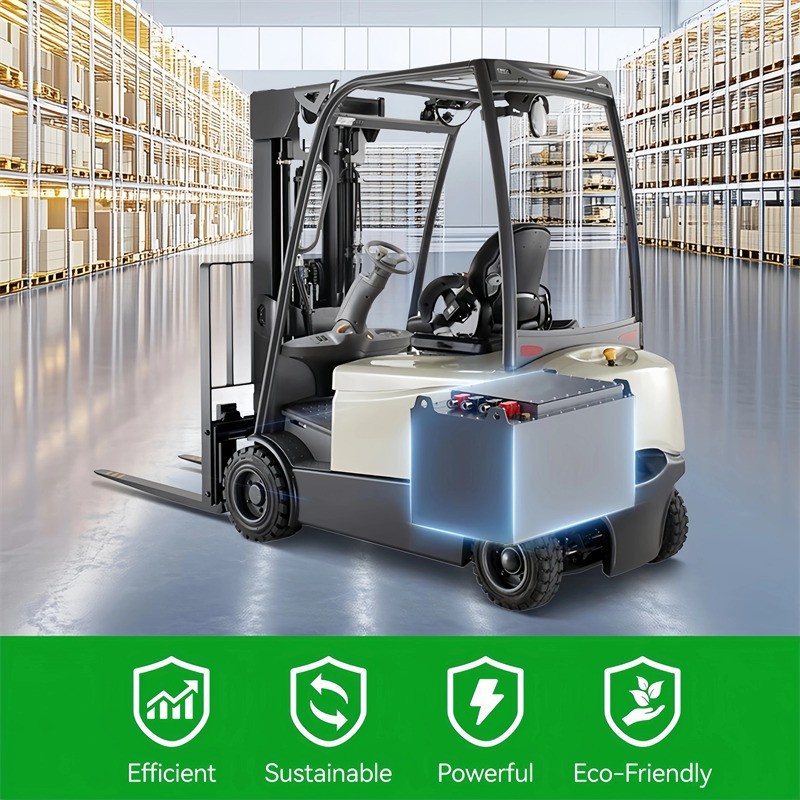

Improved Energy Efficiency
The ability to capture and reuse the kinetic energy generated during braking significantly improves the energy efficiency of the forklift. This means that the forklift can operate for longer periods on a single charge, reducing the need for frequent battery changes and lowering operating costs.
Reduced Maintenance Costs
Since the regenerative braking system reduces the wear and tear on the traditional braking components, such as brake pads and rotors, the maintenance costs associated with the braking system are significantly reduced. This can result in substantial savings over the lifespan of the forklift.
Considerations When Using a Forklift Battery in a Regenerative Braking System
While the benefits are clear, there are some considerations to keep in mind when using a forklift battery in a regenerative braking system:
Charging Infrastructure
The battery's charging infrastructure needs to be compatible with the regenerative braking system. The charging system should be able to handle the additional energy input from the regenerative braking process. In some cases, you may need to upgrade your charging equipment to ensure optimal performance.
Battery Management System (BMS)
A reliable Battery Management System is crucial for the safe and efficient operation of the battery in a regenerative braking system. The BMS monitors the battery's state of charge, temperature, and other parameters to prevent overcharging, over - discharging, and overheating. It also ensures that the energy recovered from regenerative braking is stored and distributed properly within the battery.
Conclusion
In conclusion, it is possible to use a forklift battery in a forklift with a regenerative braking system, but careful consideration must be given to the battery's voltage, capacity, chemistry, and the overall compatibility with the forklift's electrical system. Lithium - ion batteries, especially LiFePO4 batteries, offer significant advantages in terms of performance and efficiency in regenerative braking systems.
If you are considering upgrading your forklift's battery or investing in a new forklift with a regenerative braking system, I encourage you to reach out to us. As a trusted forklift battery supplier, we have the expertise and experience to help you select the right battery for your specific needs. Whether you need a 36V 690Ah LiFePO4 Forklift Battery, an 80V LiFePO4 Forklift Battery, or a 24V LiFePO4 Forklift Battery, we can provide you with high - quality products and professional advice. Contact us today to start a conversation about your forklift battery requirements.
References
- Forklift Battery Handbook, Industry Standard Publications
- Lithium - Ion Battery Technology for Forklifts, Research Papers from Battery Manufacturers
- Regenerative Braking Systems in Material Handling Equipment, Technical Reports from Forklift Manufacturers